Chemical Pixel: Processing slow violence
by Sandra Flores and Alberto Sá
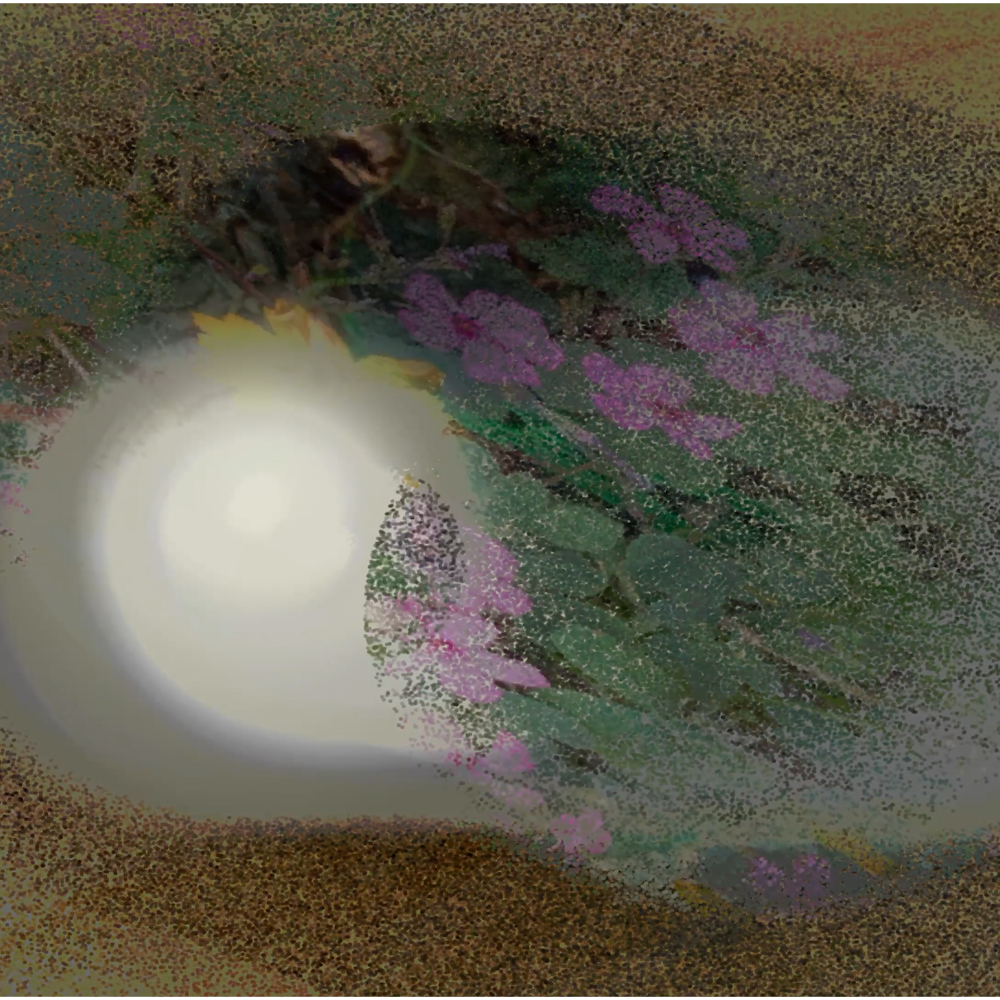
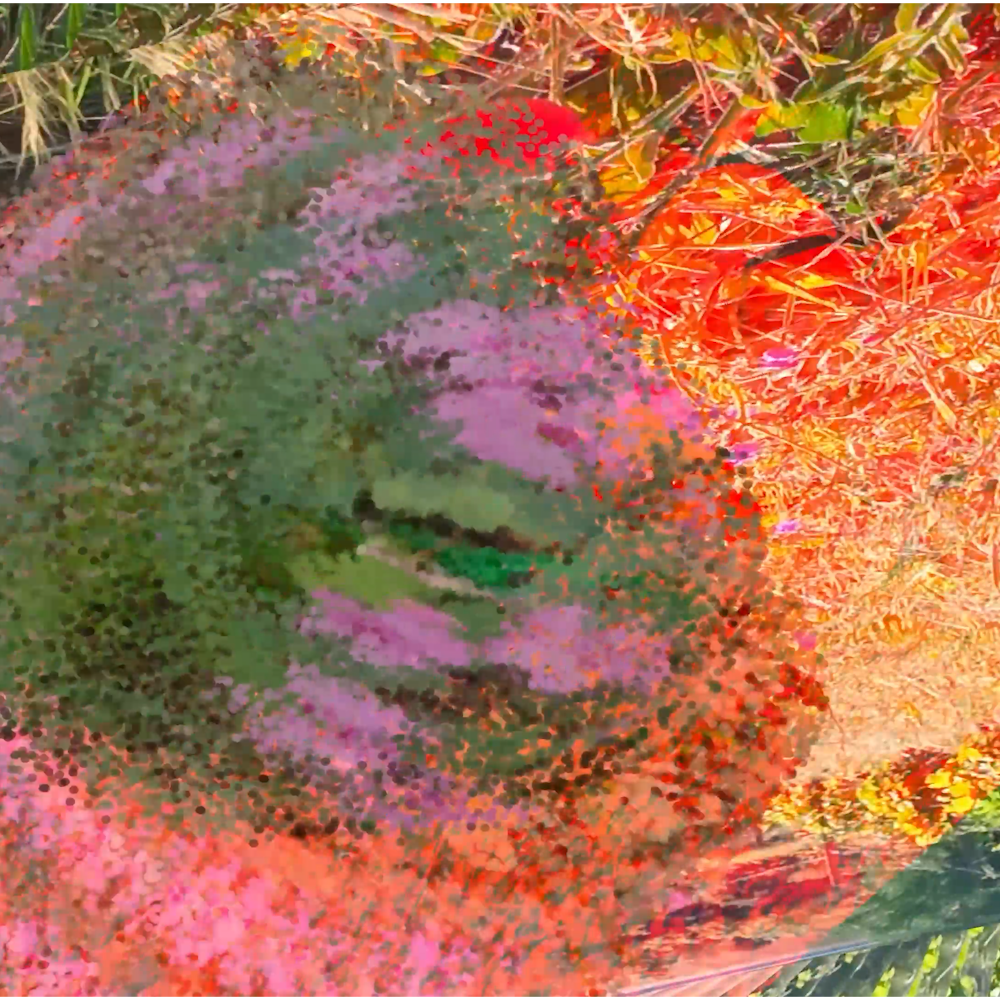
Píxel Químico is a generative video artefact, developed in Processing, as part of a research-creation project on chemical colonialism, grounded in fieldwork at an organic farm in Trás-os-Montes. It is based on the premise of ‘slow violence’ as a problem of representation – a form of violence which, because it is slow and diffuse, eludes conventional media coverage. This artefact does not merely convey information, but rather aims to generate knowledge about chemical violence in areas not covered by mainstream discourse.
The work dissects the architecture of the system through five aesthetic-algorithmic states that mimic ecotoxicological degradation, evolving from the chromatic vitality of native flowers to the final residual stillness. This dynamic is underpinned by: Perlin noise-driven vector drift as a morphological homology of the capillary penetration of systemic herbicides; the material indexicality of the pixel as a digitised soil sample (loadPixels()); the recursive cycle of incomplete restoration, which reflects the persistence of ‘eternal chemicals’; and the sonic signature of spraying (pink noise and brown noise low-pass), in symbiosis with luminous saturation and authorial audio that performatises false abundance.
The choice of Media Arts is ontologically grounded as an imperceptible process that cannot be captured, but which can be executed. Whilst photography captures the moment, and video represents it, data visualisation informs it. In this sense, the code executes a logic structurally homologous to that of the phenomenon, bringing them into alignment at the operational, discursive and aesthetic levels, and shifting the viewer from the position of the informed observer to that of a witness to the process. By treating artistic practice and artivism as devices of counter-narrative, the interplay between technology, image and symbolic mediation is emphasised.